
Why Grounding in the Winter Still Matters
Why Grounding in the Winter Still Matters

Grounding, also called earthing, refers to direct physical contact between the human body and the surface of the earth. In practice, this often means standing or walking barefoot on grass, soil, sand, or another natural surface. The idea is that the earth’s surface carries a natural electrical charge, and direct contact allows the body to absorb electrons from the ground in a way that affects human physiology.

I still make time to ground in the winter, even when it is cold and rainy! For me it has become one of those winter rituals that feels amazing in more ways than one. I dress warmly, slip on a cozy hat if it’s really cold, and grab a warm cup of water before heading outside. I sit on my chair, barefoot, and let the bottoms of my feet touch the grass for at least 15 – 30 minutes. I aim to get an hour in a day, and during Winter time that can be tricky, so sometimes I split up my session. On especially cold days I pour a little warm water over my feet off and on, because water actually improves the connection with the earth and helps me stay comfortable. Some days I alternate between standing on the ground and sitting with my back against a tree while warming up with my cup of herbal tea. Even in the winter, I notice a sense of calm flow over me that feels different from just staying indoors. I come back inside with a steadier mood, clearer head, and deeper sense of rest that seems especially needed after a week surrounded by wifi emissions, cell phones, LED lights, and screens from laptops and TVs!

Modern lifestyles have largely disconnected us from the natural electrical exchange with the earth. Shoes with rubber or plastic soles, insulated flooring in homes and offices, and a predominance of time indoors all limit the opportunity for direct body contact with the earth. Grounding proponents suggest that reconnecting with the earth through simple barefoot time can offer a range of benefits because it may influence electrical activity in the body and support physiological processes that are linked to inflammation, circulation, mood, and stress regulation.
Scientific Research on Grounding

A number of small studies have explored the potential effects of grounding or earthing on health. For example, research has shown that grounding can improve red blood cell charge characteristics and reduce blood viscosity and clumping, which is a factor in improved circulation and cardiovascular health https://pubmed.ncbi.nlm.nih.gov/22757749/. Another study found that grounding participants experienced improvements in physical function, energy levels, and reduced fatigue and mood disturbances when they were grounded compared to when they were not https://pubmed.ncbi.nlm.nih.gov/30448083/. A third example of research suggests that grounding improves mood more than relaxation alone in controlled settings where participants were grounded for one hour, supporting the idea that direct contact with the earth could influence emotional well-being https://pubmed.ncbi.nlm.nih.gov/25748085/.
Additional studies and reviews have discussed grounding’s potential effects on inflammation, immune response, wound healing, cardiovascular risk factors, and circadian or stress hormone rhythms. These studies are early and small in scale, and grounding remains a developing area of research. However, the evidence points to reasons why grounding could influence inflammation markers, sleep, stress responses, and systemic physiology when practiced consistently.
How Grounding May Support Health

Reduction of inflammation: Some research points to grounding having measurable effects on markers of inflammation and on immune cell behavior. Grounding has been shown to alter white blood cell counts and cytokine levels in ways that correlate with reduced inflammatory response https://pubmed.ncbi.nlm.nih.gov/25848315/.
Improved circulation: Grounding has been associated with increased surface charge on red blood cells and reduced aggregation, which can improve blood viscosity and circulation. Better circulation supports oxygen and nutrient delivery throughout the body and supports tissue health and recovery.
Enhanced mood and stress reduction: Connecting with the earth may influence the nervous system, helping shift the body from dominant sympathetic “fight-or-flight” mode toward more parasympathetic “rest-and-digest” activity. Studies have shown mood improvements after grounding sessions compared to sham grounding in controlled settings.
Sleep support: Some grounding research has noted that grounding during sleep can help regulate cortisol rhythms, which plays a key role in circadian health and restful sleep patterns.
Grounding in Winter: Why It Still Works

Winter is not a barrier to grounding benefits. While we might instinctively retreat indoors when the weather turns cold, some of the very factors that make modern life stressful in winter are reasons to make grounding a priority. Continual exposure to wifi emissions, cell phones, LED lights, computer screens, and TV screens can contribute to stress, disrupted circadian rhythms, and sensory overload. Grounding offers a simple practice that encourages reconnection with nature and the earth’s energy, and even a brief barefoot session outside can help counterbalance the overstimulation of technology.
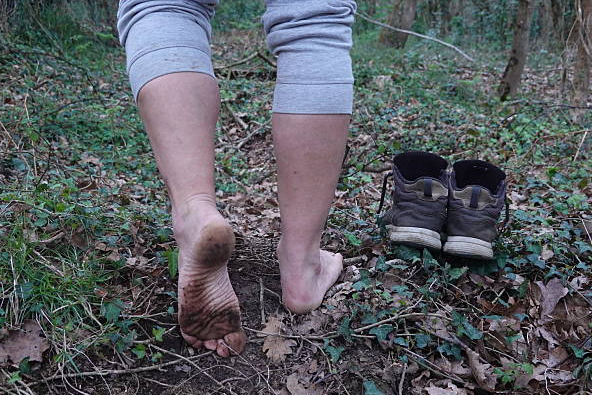
When the ground is cold, the key is to stay safe and comfortable. Wearing warm clothing, layers, and a hat will help keep your core body warm while your bare feet make contact with the earth. Taking a cup of warm water with you and pouring it over your feet here and there helps maintain the electrical connection because water is a natural conductor and improves your contact with the earth. Even 10 to 15 minutes of grounding can offer benefits, especially when practiced regularly. When conditions are too harsh, you can also sit with your feet bare against the earth under a tree or on a patch of soil, or you can find damp sand near a natural water source.
Benefits of Grounding in the Winter

Cold exposure while grounding adds another layer of benefit, especially during the winter months. Brief, intentional exposure to cold can help reduce inflammation by influencing circulation and calming overactive inflammatory signaling in the body. When combined with grounding, cold exposure may further support nervous system regulation by encouraging the body to adapt rather than remain in a constant state of comfort and stimulation. Spending time outside in colder temperatures also helps us stay aligned with natural seasonal cues, reinforcing circadian rhythm signals that are often disrupted by artificial lighting, heated indoor environments, and screen exposure.
Winter is a season meant for slowing down, conserving energy, and supporting the body with warming, grounding foods like root vegetables, broths, and slow-cooked meals. Embracing cold exposure through practices like winter grounding can remind the body of these natural rhythms and help guide healthier choices that support balance and resilience. I will be sharing a dedicated post soon on winter eating and seasonal nourishment, including why leaning into warming, root-based foods can be especially supportive for overall health during this time of year.
Practical Tips for Winter Grounding

- Dress warmly to protect your body from cold while your feet are bare.
- Bring a warm cup of water to gently pour over your feet during your grounding session.
- Start with short sessions of 10 to 15 minutes and gradually increase as comfortable.
- Choose safe, even ground free of sharp stones or debris.
- Sit against a tree or on a natural surface if standing is uncomfortable in the cold and if a chair is unavailable.
- Combine grounding with mindfulness or slow breathing to enhance the calming effect.
Other Benefits People Report From Grounding

Many people report that grounding promotes a sense of peace, lowers stress levels, and supports emotional balance. Some people notice clearer thinking and better focus after grounding sessions. Others find that grounding helps them feel more connected to nature and present in their bodies, especially in a world full of digital stimulation. While research continues to grow, these subjective experiences often align with broader biological changes that have been observed in early studies.
Conclusion

Grounding is a simple, free practice that invites us to reconnect physically and energetically with the earth. Especially in winter, when many of us are surrounded by technology, artificial light, and indoor heating, making time to ground can be a nourishing ritual for the body and mind. Even short barefoot contact with the earth can contribute to mood support, stress reduction, circulation enhancement, and a sense of reconnection with the natural world. As research continues to explore how this practice influences human physiology, the existing evidence and personal experiences alike suggest that grounding remains a meaningful wellness practice year-round.



Leave a Reply