
Mild Kimchi Recipe (Baek Kimchi)
Mild Kimchi Recipe (White Kimchi / Baek Kimchi)

I wanted to make a mild kimchi recipe that was not spicy at all, and I truly think I achieved that with this gentle white kimchi. This is a non spicy kimchi that focuses on balance, freshness, and fermentation without heat. I used ginger for a clean, bright flavor, and in this particular recipe I did not use garlic. Omitting garlic allowed the ginger to shine through and kept the overall flavor soft and approachable. If you enjoy garlic, feel free to add it back in. This recipe is incredibly versatile and works beautifully with a wide range of vegetables.
This white kimchi recipe, also known as baek kimchi, is perfect for anyone looking for kimchi without heat or kimchi that’s not spicy at all. It has all the benefits of fermentation without the intensity often associated with traditional kimchi.
Why Napa Cabbage Is Essential for Mild Kimchi
Napa cabbage is essential for making kimchi because its tender leaves and natural sweetness create an ideal base for gentle fermentation. It softens easily without breaking down, allowing flavors to develop smoothly and evenly over time. For a mild kimchi recipe, napa cabbage provides structure while keeping the finished ferment light, balanced, and approachable. Its high water content supports beneficial bacteria and helps create a clean, well-rounded flavor without sharpness. Because it absorbs seasoning so well, napa cabbage ensures that even a lightly seasoned kimchi develops depth and character, making it the best choice for baek kimchi.
Vegetables Used in This Batch
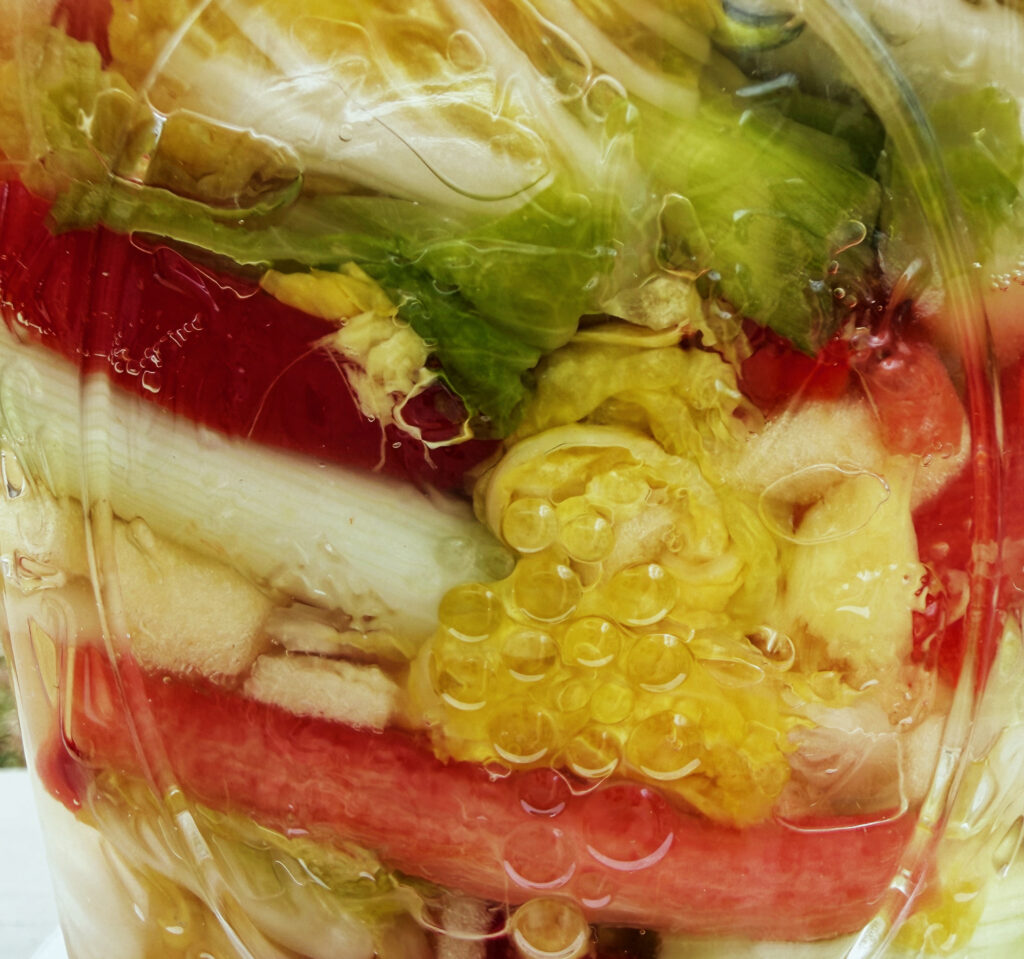
For this batch, I used some “atomic red” carrots that I grew in the fall and still had on hand. They were in great shape and added color and gentle sweetness. I paired them with green onion and red bell pepper. Other great add-ins for this mild kimchi recipe include garlic, green bell pepper, white onion, radish, cilantro, or even celery. One of the things I love most about fermenting vegetables is that every combination produces a slightly different result.
Benefits of Using a Variety of Vegetables in Kimchi
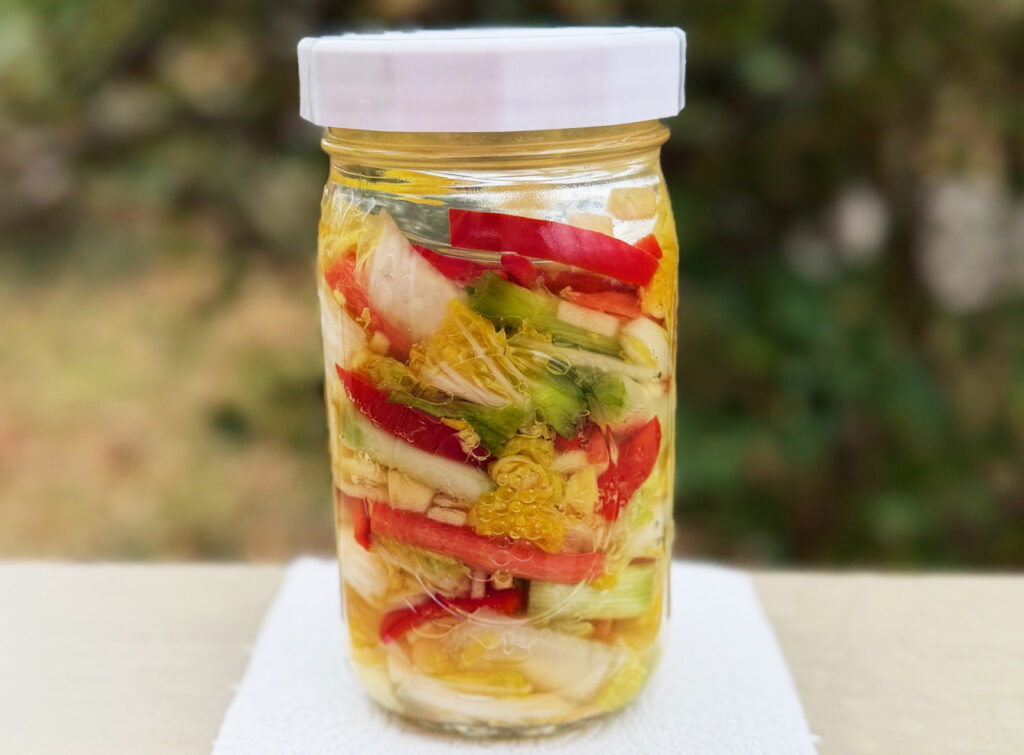
Using a variety of vegetables in kimchi supports a more diverse population of beneficial bacteria during fermentation. Napa cabbage provides sugars that fuel Lactobacillus bacteria, which are responsible for producing lactic acid and preserving the kimchi. Carrots contribute additional carbohydrates that support fermentation while adding beta-carotene and gentle sweetness. Bell peppers provide vitamin C and plant compounds that can support microbial diversity, while green onions add sulfur-containing compounds that may help beneficial bacteria thrive.
This diversity encourages a broader range of lactic acid bacteria, which can support digestion and microbial balance in the gut. Different vegetable fibers act as prebiotics, feeding beneficial microbes and helping create a more resilient fermented food.
Why Gut Balance Matters to Me
Gut balance has become increasingly important to me, and that is what initially drew me deeper into fermenting foods at home. Fermented vegetables like this non spicy kimchi provide naturally occurring probiotics that support digestion and microbial diversity. I love that ferments can be adjusted to individual tolerance levels, especially when keeping them mild and gently fermented. Making my own kimchi allows me to control ingredients, fermentation time, and overall intensity while still supporting gut health in a nourishing way.

Mild White Kimchi (Baek Kimchi)
Equipment
- 1 32oz Glass Mason Jar with Lid
- 1 Glass Weight optional
Ingredients
- 13 ounces Napa Cabbage, chopped
- 5 ounces Vegetable Add-Ins I used a mixture of carrot, red bell pepper and green onion
- 2 ounces Apple, finely diced
- 1.5 tsp Ginger, grated or minced
- 2 tsp Sea Salt, fine
Extra Brine
- 8 ounces Water
- 1/2 tsp Sea Salt, fine
Instructions
- 1. Place the chopped napa cabbage in a bowl and sprinkle lightly with salt. Massage gently until it begins to soften and release liquid. Let sit for 2 hours, tossing occasionally. 2. Add the mixed vegetables, chopped apple, and grated ginger to the cabbage. Toss gently to combine.3. Pack the mixture tightly into a clean 32oz wide-mouth mason jar, pressing down firmly to remove air pockets.4. Mix the brine by dissolving ½ teaspoon salt into 1 cup of water.5. Pour enough brine into the jar to fully submerge the vegetables. Leave at least 1 inch of extra room at the top. Place glass weight on top to keep ingredients submerged (optional). If you don't have a glass weight, you can pack a cabbage leaf at the top to keep everything submerged (including the cabbage leaf!). If you don't have any extra leaves, fill a small zip lock bag with some water and use it as a weight to keep everything submerged. Place cap on the jar and allow it to ferment at room temperature for 3 to 5 days. Release trapped gas once or twice daily or leave the cap on slightly loose so excess gas can escape. 6. Start tasting the kimchi on day 2. Once it reaches a lightly tangy, pleasant flavor, transfer the jar to the refrigerator to slow fermentation. Or if you prefer a strong, sour kimchi, keep fermenting at room temperature until desired sour level.
Notes
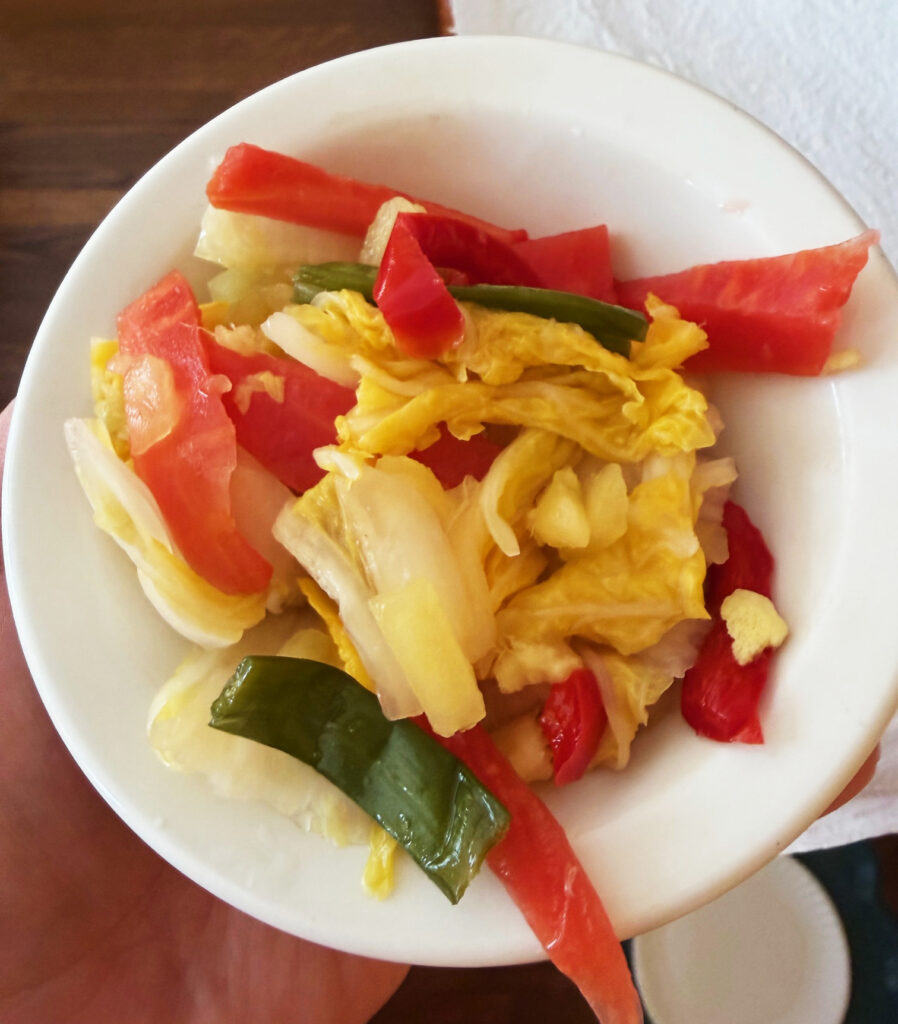
This mild kimchi recipe is one of my favorite ways to enjoy fermentation without intensity. It is adaptable, soothing, and perfect for those who want a kimchi that’s not spicy at all while still benefiting from traditional fermentation methods. Each batch turns out slightly different, which makes the process both creative and rewarding.


Leave a Reply